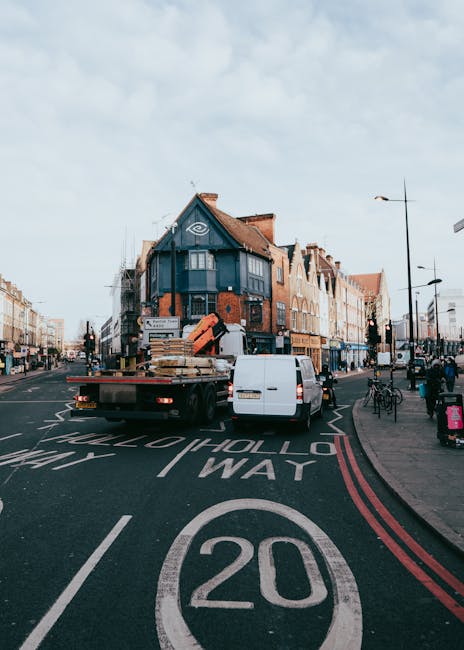
Permit fines and local rules for Haringey removals jobs
If you are arranging a move in Haringey, the last thing you want is a truck idling in the wrong place, a neighbour complaining about blocked access, or a permit issue turning a tidy removals day into a costly headache. Permit fines and local rules for Haringey removals jobs can catch people out because the rules are often less about the move itself and more about where the vehicle stops, how long it stays, and whether the street has restrictions that nobody spotted in time.
This guide breaks the subject down in plain English. We will look at why local rules matter, how permits and restrictions usually work, what kinds of mistakes trigger fines, and how to plan a removal so the day feels calm rather than chaotic. If you are comparing services too, it helps to understand how the move, the vehicle, and the street all fit together. That is the bit people miss, usually until a clamp or penalty notice shows up.
Table of Contents
- Why Permit fines and local rules for Haringey removals jobs Matters
- How Permit fines and local rules for Haringey removals jobs Works
- Key Benefits and Practical Advantages
- Who This Is For and When It Makes Sense
- Step-by-Step Guidance
- Expert Tips for Better Results
- Common Mistakes to Avoid
- Tools, Resources and Recommendations
- Law, Compliance, Standards, or Best Practice
- Options, Methods, or Comparison Table
- Case Study or Real-World Example
- Practical Checklist
- Conclusion
- Frequently Asked Questions
Why Permit fines and local rules for Haringey removals jobs Matters
Haringey is a busy part of north London, and that means moving vehicles are sharing the road with residents, deliveries, buses, school traffic, and the odd van that has clearly been parked there since breakfast. In that kind of environment, local rules matter a lot. A removal job can be perfectly organised inside the property and still run into trouble outside it.
The biggest issue is usually space. A large moving van may need to wait near the property, load near the kerb, or temporarily occupy a bay or loading area. If there are parking restrictions, bay controls, yellow lines, residents-only zones, timed loading rules, or traffic management limits, a move can become non-compliant very quickly. And once that happens, a fine can be far more expensive than the time it would have taken to check the street properly.
There is also the practical side. A small delay can cascade. If the crew cannot park close enough to the entrance, carrying furniture takes longer, lifts are held up, and neighbours get annoyed. The move becomes louder, slower, and more stressful. Not ideal when you are already dealing with boxes, tape, and the question of where the kettle has gone.
Expert summary: In Haringey removals jobs, the best way to avoid permit fines is not to hope for the best. It is to check the street, confirm the vehicle requirements, and allow enough lead time for any permit or parking arrangement before moving day.
For many households and businesses, the real value of understanding local rules is simple: it protects the schedule. That matters whether you are booking home moves, arranging house removals, or planning a larger office removals project.
How Permit fines and local rules for Haringey removals jobs Works
Think of the process in three layers: the vehicle, the street, and the timing. The vehicle might be a small man with a van setup, a larger moving van, or a heavier moving truck. Each one creates different parking and access needs. The street may have restrictions on waiting, loading, or stopping. Timing matters because some restrictions only apply at certain hours. Bit of a puzzle, really, but a manageable one.
In practice, the move organiser usually needs to confirm whether the vehicle can legally stop close to the property. If it cannot, the team may need to use a legal loading area, a pre-booked bay suspension, a permit, or a carefully timed arrival window. If any of those steps are skipped, the risk of a penalty rises quickly. That is where many fines start: not from reckless behaviour, but from a small missed detail.
Local rules can also affect what you can do on the pavement, in communal spaces, or in front of flats and estates. Some buildings have management rules, concierge procedures, or shared access constraints that sit alongside the council rules. In a typical Tuesday morning move, you may have to deal with all of them at once. Lovely, isn't it.
There is no single universal approach because the exact rules depend on the street and the property. Still, the structure is consistent: check restrictions early, match the vehicle to the location, and make sure the move plan reflects the road conditions, not just the packing list.
Key Benefits and Practical Advantages
Getting on top of permits and local rules does more than help you avoid fines. It makes the whole move feel less rushed and more predictable. That sounds obvious, but it is the difference between a smooth handover and a morning full of phone calls and second guesses.
- Lower risk of penalties: You reduce the chance of parking fines, loading fines, and avoidable enforcement action.
- Smoother loading and unloading: A legal, well-planned parking position shortens carry distances and speeds everything up.
- Less disruption for neighbours: Properly managed access keeps pavements, driveways, and entrances clearer.
- Better crew efficiency: Movers can focus on handling furniture safely instead of hunting for a workaround.
- Lower stress on the day: You are not scrambling for a plan B at the kerbside at 8:15 in the morning.
There is another benefit people underestimate: coordination. When a removals company knows the local restrictions in advance, they can choose the right vehicle, bring the right number of staff, and adjust the start time if needed. That is especially helpful for service-based moves such as man and van, removal services, or more complex commercial moves.
To be fair, the best advantage is peace of mind. When you know the parking side is sorted, you can focus on the house keys, the meter readings, and the dozen other things that always seem urgent on moving day.
Who This Is For and When It Makes Sense
This topic matters to anyone arranging a move in or out of Haringey, but some people need to think about it sooner than others. If your property is on a narrow road, near busy junctions, in a controlled parking zone, or inside a block with restricted access, the permit question should be part of the first conversation.
It is especially relevant if you are:
- moving from a terraced street with limited stopping space;
- living in flats where lifts and loading areas have time limits;
- using a larger vehicle for a full household move;
- booking a business relocation with multiple loads or multiple stops;
- trying to fit the move into a short window around work, school runs, or building access rules;
- combining a clearance, delivery, and removal in one day.
If your move is small, flexible, and on a quiet road, the permit burden may be lighter. But do not assume. A tiny road can still have strict bay controls or resident-only rules. I have seen people get caught out by a sign they had walked past a hundred times and never really read. Happens more than you'd think.
For people comparing providers, it also helps to look at practical support around the move itself. For example, if you need packing help, it may be worth pairing local parking planning with packing and unpacking services or choosing a more adaptable vehicle option through removal van services.
Step-by-Step Guidance
Here is a simple way to handle permits and local rules without overcomplicating the job. It is not glamorous, but it works.
- Check the property access first. Look at road width, entrance points, communal gates, and whether furniture needs to be carried a long distance.
- Identify parking restrictions. Read signs carefully, especially around bays, yellow lines, loading limits, and timed controls.
- Match the vehicle to the street. A smaller vehicle may be easier on tight roads, while a larger truck may need a more formal loading arrangement.
- Confirm permit needs early. If a permit, bay suspension, or special arrangement is needed, build in extra time. Do not leave it until the night before.
- Coordinate with the removals team. Share any restrictions, building rules, or access codes in advance. This is where good planning really pays off.
- Prepare for arrival. Clear hallways, reserve lifts where possible, and keep keys, documents, and essentials accessible.
- On the day, keep someone responsible. One person should be watching the road situation, the building access, and the timing. Not five people, each with a different opinion.
That last point is bigger than it sounds. A designated point of contact prevents confusion. If the driver needs a quick decision, they know who to ask. If the building manager wants clarification, there is one clear person handling it.
If you are moving a business, the same logic applies, just with more moving parts. A staged office move may involve different departments, multiple delivery bays, and tighter scheduling. In those cases, checking the rules early can save a great deal of disruption.
Expert Tips for Better Results
Here are the things that tend to make the biggest difference in real life, not just on paper.
- Do the street check in daylight if possible. Early evening or late-night planning can hide important sign details.
- Take photos of signage. It helps if anyone needs to double-check the exact wording later.
- Leave a buffer in the schedule. Traffic, lift delays, and parking searches always take longer than you want them to.
- Use the smallest suitable vehicle. Bigger is not always better. Sometimes a smaller van is the smarter move.
- Tell the removals team about awkward items. Large wardrobes, sofas, and appliances may change the loading plan.
- Ask about insurance and safety handling. If the move involves tight kerbs or fragile items, this matters more than people realise.
One small practical point: if the move is happening on a Friday afternoon or first thing on a Monday, expect the roads to feel different. Commuter traffic and delivery traffic can make even a short stop feel like a bigger operation. That is one of those things you only notice once, then never forget.
You can also reduce friction by making sure your booking and payment details are settled in advance through a clear process such as pricing and quotes and payment and security. Not a permit issue, strictly speaking, but it keeps the admin side from muddying the water.
Common Mistakes to Avoid
The same errors come up again and again. Most of them are easy to prevent, which is mildly annoying because it means the stress was avoidable in the first place.
- Assuming a van can stop anywhere briefly. A short stop can still count as a contravention in a restricted area.
- Ignoring building rules. Some flats and estates have access windows or booking procedures that matter just as much as street rules.
- Using the wrong vehicle size. Too large and you may struggle to park; too small and you may need multiple trips.
- Leaving the permit question until the last minute. This is the most common problem, and it causes the most avoidable fines.
- Not briefing the driver. If the crew does not know where to stop or who to call, the day slows down.
- Forgetting about return trips. Some people check the first arrival only, then ignore later loading restrictions that apply by the time the van comes back.
Another sneaky mistake is thinking that a friend's experience in another part of London will translate directly to Haringey. It often won't. Different streets, different enforcement patterns, different access issues. The postcode changes, the headache changes too.
Tools, Resources and Recommendations
You do not need fancy software to stay organised, though a bit of structure helps. A good moving plan can be built with simple tools and sensible communication.
- Street notes: Write down parking restrictions, bay locations, and any access instructions.
- Photo records: Take pictures of signs, entrance points, and any obstacles near the property.
- Move-day contact list: Keep the driver, property contact, and key holder details in one place.
- Room labels and inventory: These do not prevent fines, but they speed up loading and unloading, which reduces the time the vehicle is parked.
- Service planning pages: If you are still deciding what kind of move suits your property, pages like removals, removals near me, or movers can help you compare options in a practical way.
For people moving heavier loads or unusual items, specialist support can make the local-rule side easier. A well-planned vehicle choice, a sensible loading order, and a crew that understands how tight London streets can be all add up. If you have ever tried to reverse a larger van into a narrow road while a driver behind you beeps impatiently, you will know what I mean.
It is also worth checking operational policies where relevant, especially if you are hiring a company for a bigger job. Pages covering health and safety policy, insurance and safety, and terms and conditions can give you a clearer sense of how the work is managed.
Law, Compliance, Standards, or Best Practice
For removals work in Haringey, the compliance picture usually sits across a few different areas rather than one single rulebook. There are road traffic and parking restrictions, local council controls, building access rules, and general expectations around safe loading and responsible conduct. The exact detail depends on the street and the property, so this article deliberately avoids pretending there is one simple answer.
From a best-practice perspective, the standard approach is straightforward:
- check the local parking and stopping restrictions before the move;
- confirm whether a permit or bay suspension is needed;
- make sure the vehicle is suitable for the access conditions;
- avoid blocking driveways, crossings, or emergency access;
- keep the loading process organised so the vehicle is not left in a restricted spot longer than necessary;
- follow any building management instructions carefully.
If the move involves commercial premises, responsibility can be broader. There may be landlord requirements, building security rules, loading dock procedures, and timing limits that affect the removal plan. In those cases, it is sensible to treat compliance as part of the project, not as a side note.
Good providers will also think about recycling, disposal, and the treatment of unwanted items. If you are clearing furniture or end-of-life items as part of the move, it is worth looking at recycling and sustainability and related collection options such as furniture pick up.
Options, Methods, or Comparison Table
Different move types carry different levels of permit complexity. Here is a simple comparison to help you think it through.
| Move type | Typical parking pressure | Permit risk | Best fit |
|---|---|---|---|
| Small flat move | Medium to high in narrow streets | Moderate | Short carry distance, flexible timing, smaller vehicle |
| Family house move | Often high, especially with larger vehicles | Moderate to high | Planned parking, more crew support, early permit check |
| Office relocation | Variable, but often tightly scheduled | High if access is not pre-arranged | Managed access, documented timings, clear building contact |
| Man and van collection | Usually lower, but depends on street controls | Low to moderate | Smaller loads, quick stop, simple access |
The best method is not always the cheapest one. Sometimes a slightly more flexible vehicle or a better-timed arrival saves more than a bargain booking ever could. That is especially true on busy roads where a bad parking choice costs time and money.
If you are unsure which route fits your situation, comparing house movers, man with van, and office relocation services can help you weigh speed, access, and risk in a sensible way.
Case Study or Real-World Example
Imagine a second-floor flat move in a Haringey side street on a damp Thursday morning. The street is lined with parked cars, the pavement is narrow, and the property is only a few minutes from a busier road. The movers arrive on time, but the first parking spot turns out to be restricted during the loading window. If that had been discovered on the day without preparation, the van would have been forced to circle, the team would have waited, and the move would already be behind schedule.
Instead, the move was planned the day before. The organiser checked the street layout, made sure the building entrance was clear, and used a vehicle size that fit the road better. The crew loaded quickly, the resident had fewer stairs to worry about, and the whole thing stayed within a tight time window. Not flashy. Just well done.
That is the pattern you want. Most successful removals jobs are not rescued by heroics; they are made successful by boring, careful decisions taken early. Honestly, boring is underrated in moving.
For a business move, the story is similar. A small office relocation can go sideways if the unloading bay is not reserved or the driver cannot wait near the entrance. But with the right planning, the work stays orderly and the team can keep people on site productive rather than standing around with a laptop bag and a coffee that's gone cold.
Practical Checklist
Use this checklist before the move date. If you can tick most of it off, you are in good shape.
- Confirm the exact moving address and access points.
- Check parking signs and any time-limited restrictions near the property.
- Decide whether a permit, bay suspension, or loading arrangement is needed.
- Choose a vehicle that fits the street and the volume of items.
- Tell the removals team about stairs, lifts, gates, or long carry distances.
- Reserve any building lift or loading slot where possible.
- Keep a contact person available on moving day.
- Set aside essentials, documents, and keys separately.
- Check insurance and safety arrangements before the job starts.
- Allow extra time for traffic, delays, and unexpected loading issues.
If you want a simpler starting point, a quick conversation with a local provider can help you map the whole job out. Pages such as removal company and removal companies are useful when you are comparing the kind of support you need rather than chasing the cheapest headline price.
Get a free quote today and see how much you can save.
Conclusion
Permit fines and local rules for Haringey removals jobs are not just admin details. They are part of what decides whether your move feels organised or messy. A little preparation goes a long way: check the street, match the vehicle, confirm any permit need, and keep the access plan simple. That is usually enough to avoid the worst surprises.
The broader lesson is reassuring, really. You do not need to be an expert in parking law to move successfully in Haringey. You just need to ask the right questions early, keep the plan realistic, and work with people who understand local access properly. The rest tends to fall into place.
And if it still feels like a lot to juggle, fair enough. Moving is one of those life tasks that looks simple until you are actually doing it. A calm, well-prepared approach always wins in the end.
Frequently Asked Questions
Do I need a permit for removals jobs in Haringey?
Sometimes, yes, but not always. It depends on the street, the parking controls, the vehicle size, and how long the van or truck needs to stop. Always check the local restrictions before moving day.
What kind of fines can happen during a move?
The most common issues are parking or loading penalties if a vehicle stops where it should not, stays too long in a restricted area, or blocks access. The exact penalty depends on the situation, so prevention is the safer route.
Can a small van avoid permit problems?
A smaller vehicle can help in tight streets, but it does not remove the need to follow local rules. If the bay, road, or loading area is restricted, size alone will not solve the issue.
How far in advance should I check the rules?
As early as you can. A few days is better than a few hours, especially if any permit or parking arrangement needs to be set up. Last-minute checks are where avoidable stress usually begins.
Are house removals and office removals treated the same?
No. They can involve different access arrangements, timings, and levels of coordination. Office moves often need more planning because building rules, loading bays, and business hours may all come into play.
What if my street has no obvious loading space?
Then planning matters even more. You may need to consider a smaller vehicle, a different arrival time, or a formal parking arrangement. It is better to solve that in advance than hope a space appears on the day.
Do building rules matter as much as council rules?
Yes, they often do. A building may have its own access windows, lift bookings, or security procedures. Even if the street is fine, a building rule can still delay the move.
Is a man and van service less likely to need a permit?
Not necessarily. It can be easier to park a smaller vehicle, but the same local restrictions still apply. The real question is whether the vehicle can stop legally where the loading needs to happen.
What can I do to reduce the risk of delays?
Share access details early, prepare the property, keep one clear contact person available, and make sure the removals team knows the parking situation. Small details save large amounts of time.
Should I compare different removal services before booking?
Yes. Comparing options such as home moves, removals, man and van, or office relocation services helps you choose the right scale of support for the street and the property, not just the cheapest quote.
What should I ask a removals company about local rules?
Ask how they handle parking restrictions, whether they need advance access information, what vehicle size they recommend, and how they manage tight loading conditions. Good answers are usually clear and practical, not vague.
Where can I find more service information on the site?
You can explore pages like removals, house removals, and contact us if you want to discuss the move in more detail.